
The stage between Logrono and Najera was undoubtedly the heaviest one I have experienced so far on the camino. Not physically, because when I reached Najera after hiking just short of 30k, I almost walked straight through the city because it didn’t feel like I had reached 30k yet. Emotionally though, these thirty kilometres were like a waterfall of thoughts, revelations, questions and answers and so many tears. The good kind of tears, those that feel cleansing in a way but also leave me puffy-eyed and socially tired. For the last ten kilometres, I popped in my earbuds, searched out a song and clicked on repeat. When I eventually reached Najera, I looked for the smallest albergue I could find, dropped my stuff off, and then set out to hike up to the top of the hill overlooking the city, because I’ve always felt more at ease when I am somewhere high up with a good view.
Up there, I took out my notebook to write down the absolute jumble of thoughts that was occupying my poor brain at that moment. In order to offer some insight in my brain I’ll share a very prolific quote that deeply captivates what I felt in that moment down below.

Back down in the city, I went and bought myself a donut because I definitely deserved a donut* after a day like that, and then texted Pol to ask if he was in Najera too and wanted to meet up for dinner. We had pizza together – I decided to act as if I didn’t have a lactose intolerance and ordered a Quatro Formaggi that I deeply regretted afterwards – and then I went back to my albergue to sleep because even though it was just past 8 pm, my energy had officially run out for the day.
*This is something that I definitely tell myself on a daily basis.
I shared a room with two lovely women, one from America and a woman from Bosnia who spoke Dutch and was elated to meet another Dutch-speaking person. We chatted for a bit, and even though I had felt socially drained their company lifted me up a bit. We each shared our reason to be hiking the camino, and maybe it was that which gave me some peace of mind: realising that I wasn’t alone in my mental anguish on this road. That’s what’s so special about the camino: everyone has their own reason to reach Santiago, each of us is trying to gain something or leave something behind. Even if you’re walking all on your own, you’re never really alone. Even if it’s just the energy of long-forgotten people who walked before you, there’s always an essence of something with you on the camino.

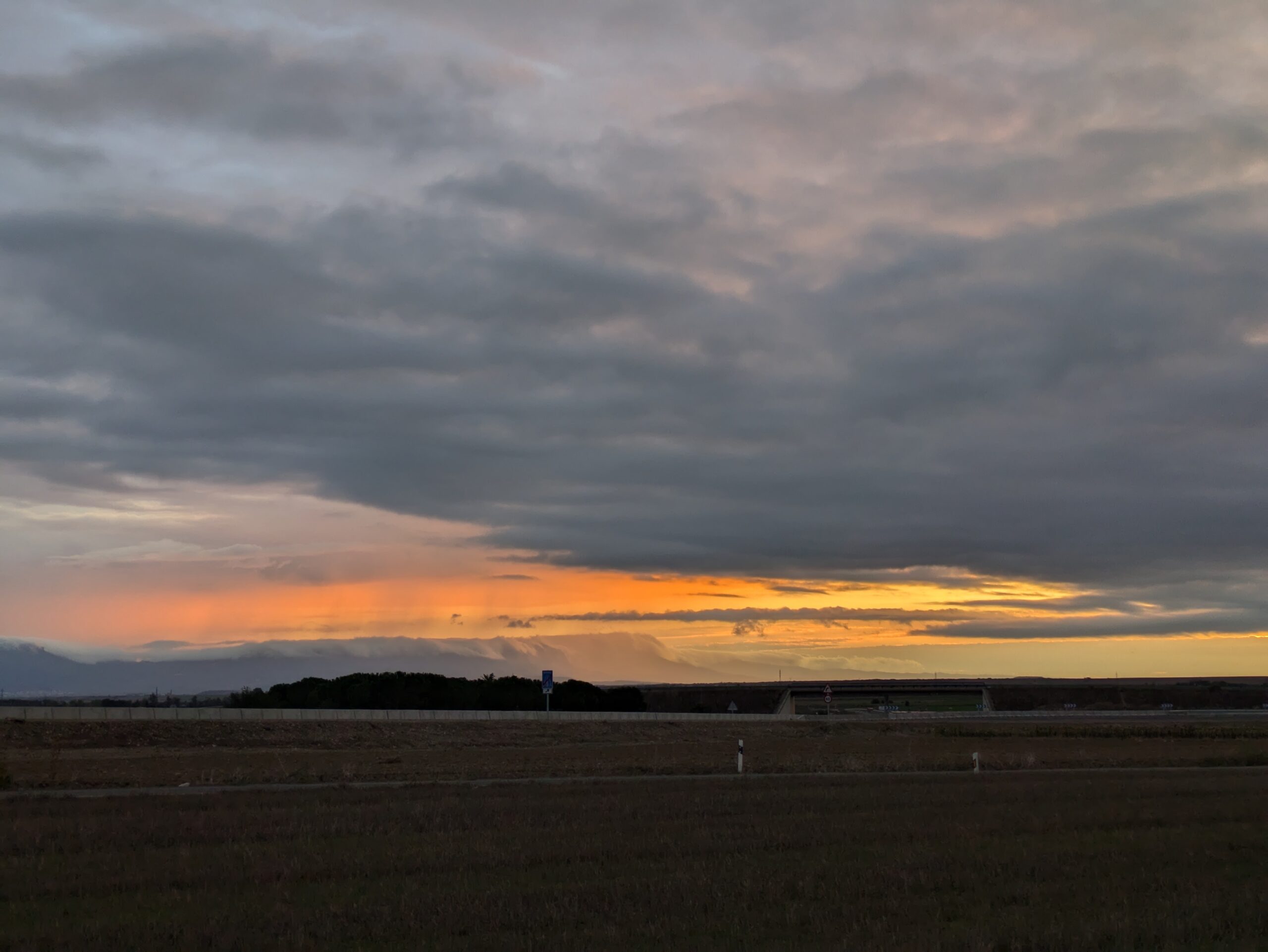
When I left in the morning, I got up early to catch another sunrise and popped in my earbuds from the get-go. No more thinking today, I decided. I thought enough for the next three days yesterday. And I did exactly that: I walked the entire stage while listening to music, mouthing along to the words and doing little jiggle-dances between my steps if the songs got particularly hype-y. In Santo Domingo de la Calzada, I found myself a little cafe where I ordered coffee and a cake and sat down to write a bit.
Santo Domingo is an interesting city. Like most of the bigger cities along the route, much of its identity lies in the history of the camino. For over a thousand years already, people have been walking all across Europe to get to the remains that are said to belong to the Apostle Saint James. It’s something that you can clearly see in the lay-out of most towns and cities that the camino passes through, because usually the camino will be running along the main street, with the rest of the place built around it. There will even be some places with some sort of legend tied into the concept of pilgrimage. Santo Domingo de la Calzada, however, takes this to the extremest extent that I’ve had the pleasure of experiencing so far. And you might think that’s dramatic of me to say, but take me on my word here. In case you still don’t believe me, I’m just gonna say, read on a little bit until you reach the part about the chickens and then come back to me.

Here’s the story of Santo Domingo in a very very short form: once there was a family of pilgrims walking to Santiago, and when they stopped in Santo Domingo, the daughter of the albergue-owner fell in love with the son of the pilgrims. When her love wasn’t returned, she placed a stolen silver goblet in the pack of the son and then made sure people found it and assumed he had tried to steal something (we should really have a conversation about the portrayal of women in these kinds of legends but anyway). Because stealing was very much a sin, the son was then condemned to hanging, and the parents continued their now sorrow-filled pilgrimage to Santiago. Once they arrived, they prayed to Saint James, sure of their son’s innocence and asked for salvation for his soul. On their way back home, they passed through Santo Domingo again and found their son hanging from the gallows. This would be really really morbid if it wasn’t for the fact that – according to the legend (I need to point out that this is a legend because I cannot write this down with a straight face) he was still alive because Saint James had been propping him up the entire time so he could keep breathing.
When the lord of the city was informed of this miracle, he said something along the lines of, “the chicken I’m about to eat will sooner be alive than that boy”. Of course, his roasted chicken chose that exact moment to come back to life, jump around his plate and loudly cock-a-doodle-doo around the table.
Now, nothing wrong with a cool origin story like that, except. Except for the fact that to this day there’s an honest-to-God chicken coop high up in the wall of the cathedral of Santo Domingo with a rooster and a chicken in it. Oh, and, they have this local famous cookie that is called the ‘hanged man’ and it has a hanged man on it. So, yep. Interesting city.

Because hiking over twenty kilometres was not enough, I spent the second part of my afternoon visiting the cathedral and the bell tower, hiking up and down the never-ending flight of stairs to get cool views over the city.
In the albergue, I waited until the place was closed and then switched bunks because mine was a top bunk that had no guards, and I’m the kind of person who:
- moves around a lot in her sleep and
- images all kinds of horror situations that include but aren’t limited to falling out of top bunk in the middle of the night and ending up with a broken skull.
To ensure maximum amounts of rest and relaxation, I looked around for an empty lower bunk. I found one in the room next to mine, which was being occupied by Pol and two Danish guys who gave me the permission to invade their room and get a safer place to sleep.
The next day, I left early and alone, but Pol quickly caught up to me when I stopped for breakfast at a small food truck. When I ordered a coffee without milk, the barista took one look at me, nodded sagely, and said, “I will make you fly today.” And he wasn’t even lying, because the next few kilometres were a caffeine-induced rush, one that ended abruptly when I had to take a break because my leg had started to hurt a lot – more than I had experienced so far on the camino, and I eventually decided to slap a numbing plaster on it**. To support my leg a little bit more, I slowed down my pace, leaving Pol to go on without me, and took an extra break. I saw some people I knew at a little bar, and made to sit down at their table with my coffee and pastry, when I heard someone speak Flemish behind me.
It’s true what they say about becoming more patriotic when you live abroad because I’ve never turned around in my life so fast. I walked with the Belgians for a while, and we eventually parted ways in Belorado, where they stayed and I continued on. I caught up with Pol a little out of Belorado, and we arrived together in Tosantos, where we decided to check if the albergue had space. They did, and we got checked in and shown to the beds.
**For those of you missing some context here: I have permanent nerve damage in my right leg after a bad fall I had nine years ago. In general it doesn’t give me a lot of trouble, but sometimes there are days where the pain is quite high and I can numb it with special tape.

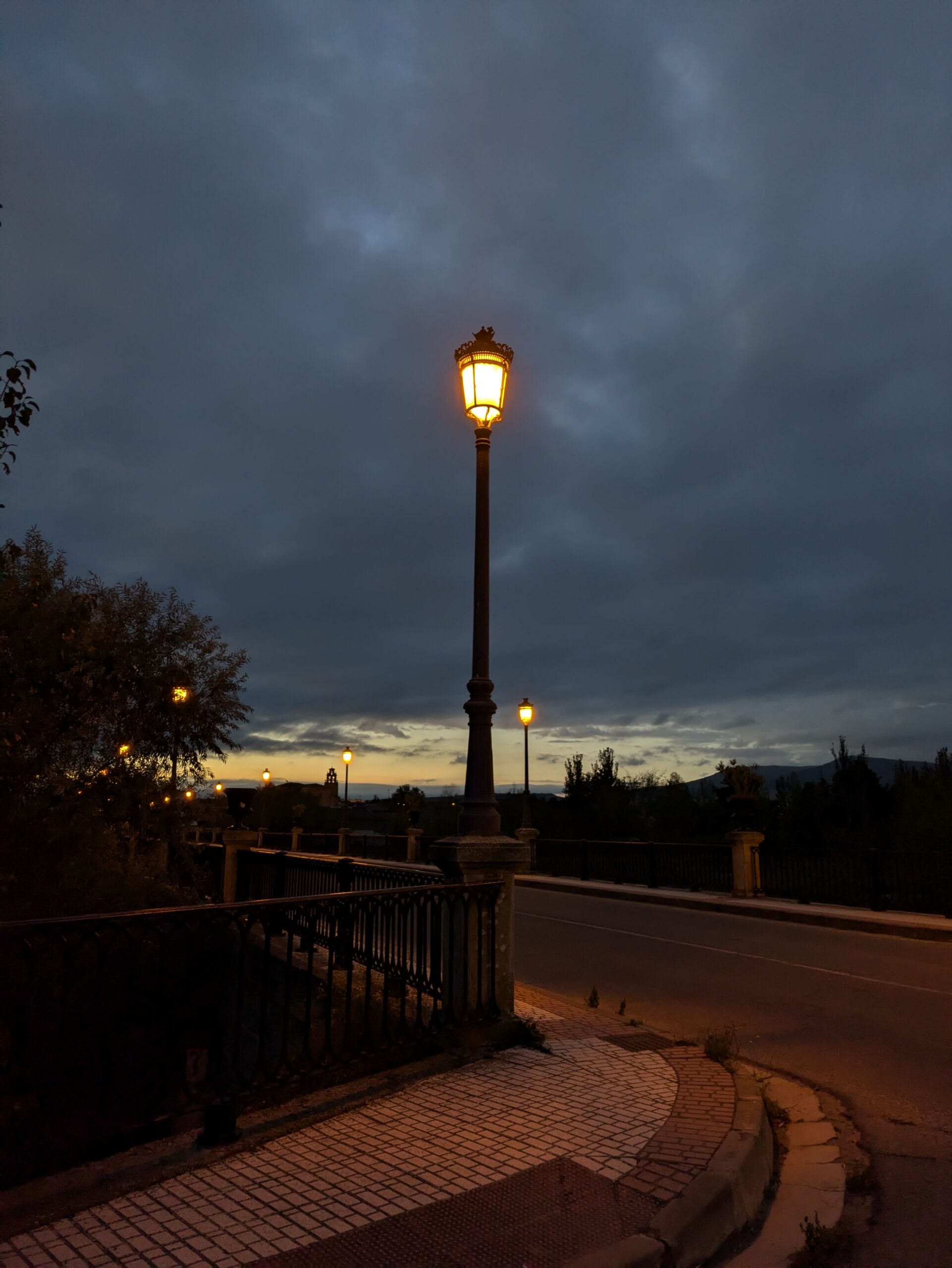

Or, well. Beds is maybe not the right description. Mats would fit better. You know that kind that they use to teach kids to tumble in PE class? The room was filled with them, all pressed together. Extremely lucky for us, we only had to share the space with two more pilgrims – the evening before there had been nineteen of them. When it became clear no one else would join, we stacked some mats on top of each other for more comfort. Me and Pol had yet to have lunch, so we asked around in the albergue if the town of Tosantos, with its capacity of thirteen citizens, maybe had some eating opportunities. They informed us that they did, but since it was some sort of town holiday everything was closed. But not to worry, we could have some leftovers in the albergue. We had the leftovers, and then I spent the rest of the afternoon lounging around and reading a book. In the evening, we had paella in the albergue and then went up to pray in the little chapel in the attic because it was a municipal albergue and sometimes they did that. At this point I was feeling extremely tired though, so while I don’t remember a lot about the actual praying, I do remember feeling absolutely awful and glancing at the clock every other minute while thinking, “I want to go to bed.”
To be honest, the ‘feeling awful’ part should have given it away, because a few hours after going to sleep I woke up with a stomach that was having a rebellion akin to the size of the French Revolution. On my way back up from the bathroom, I met Pol, who was also going down to the bathroom with a hand pressed against his stomach. And it was in that moment that I realised we were, in no uncertain terms, fucked.
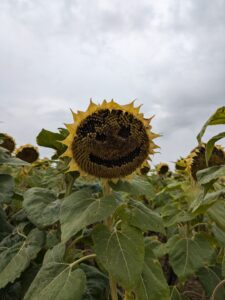
(Camino lesson: don’t eat the fucking leftovers, and definitely don’t heat up the fucking leftovers).
There’s a rule that states that sick pilgrims are allowed to stay at an albergue for longer than just one night, but if anything would make me feel more sick than I already was, it was the thought of staying in that mat-room with nineteen other people while I was fighting off diarrhoea and the constant urge to throw up. So I got my backpack and I got my hiking poles and I went to the bathroom one more time and then started hiking to the next town. I wasn’t feeling awful enough to stop at the next town, and seven kilometres later I even dared to say I was feeling somewhat along the lines of ‘fine’. I got some breakfast and electrolytes, and after waiting a while to see how my body would react, I decided to hike on.
In retrospect, this was an extremely bad idea, because it was 12 km without a town. Ten minutes into this part, my breakfast made a reappearance, together with half of my dinner of the evening before. I could have gone back, but then again I had also just emptied my entire stomach and if all the bad stuff was out of my body, surely I would be fine, right? Plus, if I was going to be miserable, might as well be miserable in the woods.

It absolutely wasn’t fine, because I threw up again and then made the very stupid decision to stop drinking because I didn’t want anything in my body that could resurface in any sort of unpleasant way. These 12k were also very beautiful, something I only remembered vaguely because at this point I was feeling lucid and hiking on pure determination. At the end of the day, I had hiked 22k – I still don’t fully understand how I managed to do that – and also severely dehydrated. I nearly wept when the albergue still had place and pretty much faceplanted in my bed. There were some familiar places in the albergue who had already caught on to my miserable state and started checking up on me. I laid in bed and rested and tried my best not to cry because I didn’t need to feel any shittier than I already did, and I sternly told myself to start drinking some fucking water if I wanted to feel better tomorrow***. Eventually, I managed to keep some food down and even succeeded in having dinner without having to run to the nearest toilet.
To end this blogpost, I would like to share the very prolific words I wrote down in Ages.
“Generally felt like shit the entire day, memories are kind of lucid.”
Past-me wasn’t wrong, because during my dinner there was a moment where I started a conversation with someone who mentioned that we had actually met earlier in the morning, to which I could only respond, “… I do not remember that.”
***I generally don’t like it when people take care of me, but when I’m sick I’m absolutely pathetic if people don’t take care of me. It’s dramatic, really.
